MetaMask introduces native Bitcoin support
MetaMask has officially added support for Bitcoin, marking one of the most significant updates in the wallet’s history.
Known primarily as the gateway to Ethereum and EVM-compatible ecosystems, MetaMask is now expanding into the world’s largest digital asset.
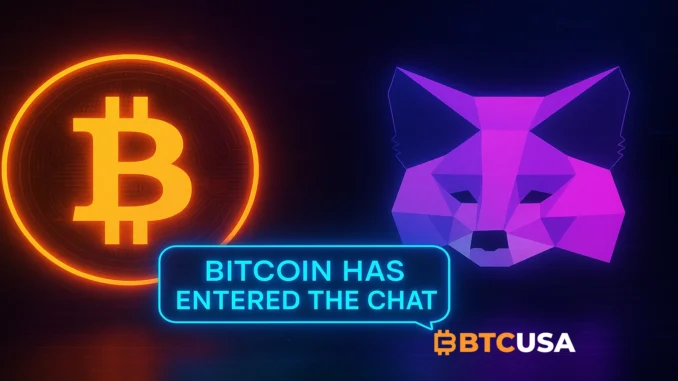
The announcement was made through MetaMask’s official channels with a simple message: Bitcoin has entered the chat.
What Bitcoin support means for users
For the first time, MetaMask users can:
• store BTC
• send and receive transactions natively
• manage Bitcoin alongside Ethereum, L2s, and EVM networks
• use a unified wallet interface for multi-chain activity
This shift pushes MetaMask beyond its traditional role as an Ethereum-first wallet and reflects the growing demand for multi-chain functionality.
Why MetaMask is expanding now
Several factors appear to be driving this strategic expansion:
• rising interest in Bitcoin integration across Web3
• growth of Bitcoin L2 ecosystems and emerging use cases
• competitive pressure from multi-chain wallets
• demand from MetaMask’s 30M+ monthly active users
By adding Bitcoin, MetaMask positions itself as a universal Web3 wallet rather than an Ethereum-only gateway.
Impact on the broader ecosystem
Bitcoin support within MetaMask has the potential to reshape wallet competition.
It may accelerate:
• multi-chain adoption by retail users
• development of cross-chain applications
• interest in Bitcoin-based smart contract layers
• integrations between BTC and DeFi infrastructure
This update could also serve as a catalyst for new Bitcoin-native onboarding flows and future L2 integrations.
BTCUSA Insight
MetaMask expanding into Bitcoin marks a major symbolic and practical shift. The largest Web3 wallet embracing the oldest blockchain suggests a converging multi-chain future where users expect unified access, not siloed ecosystems.
It also highlights Bitcoin’s increasing relevance beyond store-of-value narratives as L2 development accelerates.
BTCUSA Outlook
We expect MetaMask’s BTC support to drive:
• greater retail onboarding for Bitcoin
• more developers building cross-chain experiences
• intensified competition among wallet providers
• rising integration between Bitcoin and Web3 applications
If MetaMask later adds support for Bitcoin L2 networks, the impact could be even more pronounced.