
Bowman: Banks must be allowed to compete with fintech and digital assets
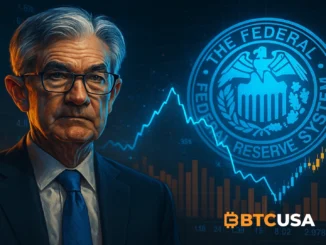
Federal Reserve Governor Michelle Bowman delivered a notable policy message on the future of digital assets and financial innovation in the United States. According to Bowman, banks should not be sidelined as fintech firms and crypto companies lead the development of new financial technologies.
She stated that regulators need to provide clear and consistent rules so that traditional financial institutions can compete fairly and responsibly with emerging digital-native platforms.
Unified standards for stablecoin issuers under the GENIUS Act
Bowman confirmed that U.S. regulators are developing unified requirements for stablecoin issuers covering:
• capital adequacy
• liquidity buffers
• risk management frameworks
These standards will be part of the GENIUS Act, a legislative initiative aimed at defining how stablecoins operate within the U.S. financial system.
Bowman emphasized that stablecoins represent a growing segment of the payments and settlement markets. Because of this, regulators must ensure that issuers meet transparent, robust, and enforceable rules — but without stifling innovation.
Clear regulatory boundaries for digital asset activity
One of Bowman’s core points is the need for regulatory clarity regarding what kinds of digital asset activities banks may engage in.
She warned that the current environment is marked by:
• fragmented guidance
• inconsistent supervisory expectations
• uncertainty around custody, tokenization, and settlement
• regulatory hesitation around new technologies
Bowman argued that banks need clear boundaries to operate safely while still being able to adopt emerging technologies.
Innovation should be regulated, not restricted
Bowman highlighted that the role of regulators is not to fear innovation but to manage risks responsibly. She stated that effective oversight should:
• encourage experimentation
• enable efficient technological adoption
• ensure consumer protection
• preserve financial stability
Her stance contrasts with some past regulatory approaches that treated digital assets primarily through the lens of risk avoidance instead of opportunity analysis.
Digital assets require a tailored regulatory approach
Bowman criticized the idea of regulating digital assets by simply applying legacy bank rules. She said that crypto ecosystems have:
• unique market structures
• different types of operational risks
• new settlement and custody models
• distinct technological architectures
• decentralized actors that do not fit traditional bank frameworks
Because of this, she argued that digital assets must be regulated according to their specific characteristics rather than by copying rules designed for large banks.
Why Bowman’s stance matters
Bowman’s comments signal a shift in regulatory tone:
• openness to responsible digital asset integration
• recognition of innovation as a competitive advantage
• the emergence of national stablecoin standards
• acknowledgment that banks should participate, not be excluded
• momentum toward clearer, more predictable rules
Her statements suggest that U.S. policymakers may move toward a more pro-innovation regulatory framework in 2025 and beyond.
Outlook
If regulators adopt Bowman’s recommendations, the U.S. banking system could see:
• clearer rules for crypto custody and tokenization
• stronger stablecoin oversight under the GENIUS Act
• increased bank participation in blockchain networks
• competitive pressure on fintech and crypto-native issuers
• growth in responsible innovation across payments and lending
BTCUSA will continue monitoring the progress of the GENIUS Act, developments in stablecoin policy, and the evolving regulatory landscape that shapes how traditional finance and digital assets converge.