Why underbanked regions are being targeted
Where financial infrastructure is weak, trust is fragile. In many emerging economies, millions of people gain their first exposure to money through smartphones rather than banks. This creates perfect conditions for exploitation.
Scammers know this. They do not need to break systems — they only need to manipulate people.
The most common crypto scam patterns
Most crypto fraud in these regions follows predictable psychological structures.
Fake support agents impersonate exchanges or wallet providers.
Investment schemes promise guaranteed daily returns.
Romance scams exploit emotional vulnerability.
Airdrop traps lure users into signing malicious transactions.
None of these require technical sophistication. They rely on urgency, authority and fear.
How social engineering beats technology
Blockchain itself is resilient. The weakest layer is human behavior.
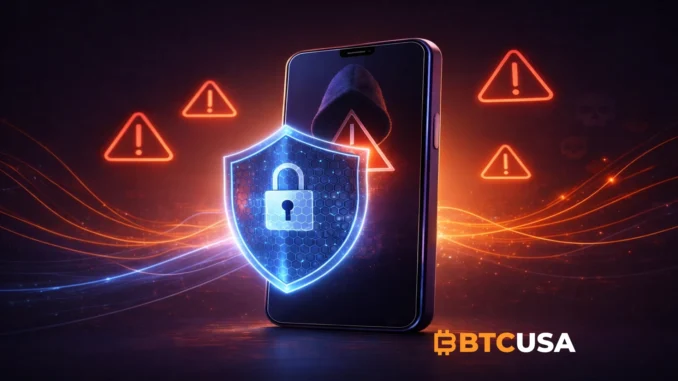
Scammers use messaging apps, social media and cloned websites to create believable environments. Once trust is established, the victim is guided step by step toward irreversible transactions.
What users can do today
Practical protection does not require expertise.
Never share seed phrases.
Verify URLs manually.
Do not trust private messages from “support”.
Treat guaranteed returns as guaranteed fraud.
Why education matters more than regulation
No regulatory framework can outpace social engineering. Education is the only scalable defense.
Local communities, NGOs and financial inclusion programs must integrate digital asset safety into their core training efforts.
BTCUSA outlook
Crypto fraud will not disappear. But its impact can be reduced.
The future of digital finance in underbanked regions depends not on innovation alone, but on whether users are empowered to recognize threats before damage is done.