Daniel Moore focuses on on-chain data, market structure, and crypto market dynamics. His work centers on explaining how liquidity, narratives, and blockchain activity interact across different market cycles. He writes analytical explainers and data-driven market pieces for BTCUSA.
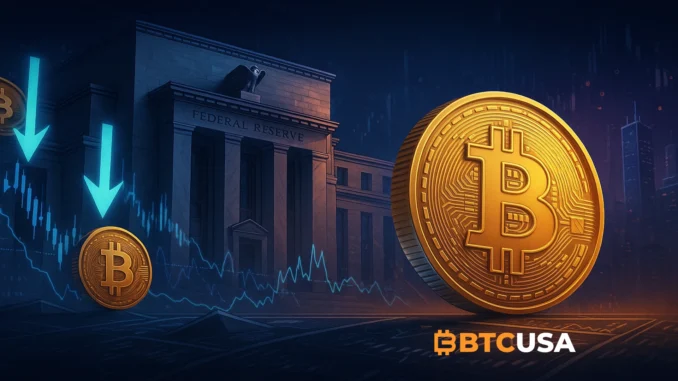
The GENIUS Act didn’t just regulate stablecoins. By forcing dollar-pegged stablecoins into bank-like compliance, it strengthened the dollar’s network effect and compressed Bitcoin’s monetary premium.
A mysterious wallet sent 107 BTC to a burn address in five transactions, permanently removing $6.7M from circulation and reigniting debates about Bitcoin supply and tokenomics.
David Hoffman sold his last ETH as Ryan Sean Adams declared the end of an era, forcing the crypto community to confront whether the Ethereum narrative is losing its most committed voices.
The University of Michigan’s consumer sentiment index fell to crisis-era levels as inflation expectations spiked, forcing crypto traders to reassess macro risk and near-term positioning.
Tokenization markets are surging as regulators signal openness, with investors betting that clearer rules will finally unlock onchain real-world assets at scale.
Long-term holder supply has surged by over 2 million BTC to 16.3 million during the current bear market, breaking a multi-year downtrend and signaling deep conviction among Bitcoin holders.
New research shows only 10% of tokenized real-world asset liquidity is actively deployed in DeFi protocols, highlighting a deep mismatch between supply and real usage.
Bitcoin hovers near $77,700 after a liquidation event, but open interest holds and funding stays flat, indicating de-risking rather than capitulation. The next test is $75,000.
Privacy coins and quantum-resistant tokens rally as bitcoin consolidates, signaling capital rotation. What it means for market structure and speculative flows.