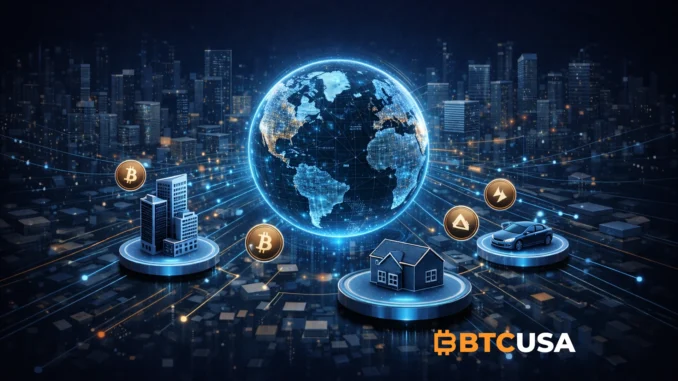

The Great Migration Onchain: Financial Assets Move to Blockchain Rails
Financial markets are beginning to experience what some analysts describe as a “great migration onchain,” as traditional financial assets increasingly move onto blockchain infrastructure.
The shift is driven by structural advantages offered by tokenized systems, including lower transaction costs, faster settlement speeds, and the ability to automate financial processes through programmable smart contracts.
Why Tokenized Infrastructure Is Attracting Institutions
Tokenized assets allow traditional financial instruments to operate on blockchain networks rather than legacy financial rails. This change can significantly reduce operational complexity and settlement times compared with traditional systems that often rely on multiple intermediaries.
Blockchain infrastructure also enables near-instant transaction settlement and improved transparency through publicly verifiable ledgers.
As financial institutions explore these capabilities, tokenization is gradually moving from experimental pilot programs toward real-world financial infrastructure.
Lower Costs and Faster Transactions
One of the most frequently cited advantages of blockchain rails is cost efficiency.
For example, the Aptos network processes roughly 10 million transactions per day with an average transaction cost of approximately $0.00007.
Such low-cost transaction environments illustrate how blockchain networks can handle large-scale financial activity while maintaining minimal operational overhead.
Compared with traditional financial systems — where cross-border payments and settlements can take days and incur significant fees — blockchain-based settlement offers dramatically faster and cheaper alternatives.
Tokenized Assets Gain Momentum
Tokenization allows a wide range of assets to exist and operate directly on blockchain networks. These assets can include:
- government bonds
- commodities
- equities
- real estate
- private credit
The trend is already visible across multiple segments of the digital asset market, particularly within the rapidly growing sector of real-world assets (RWAs).
Tokenized treasuries, tokenized gold, and blockchain-based funds are increasingly attracting institutional participation as financial firms explore ways to integrate blockchain infrastructure into traditional capital markets.
BTCUSA Insight
The migration of financial assets onto blockchain rails represents more than just technological experimentation.
It signals a broader structural shift in how financial systems may operate in the future. Rather than replacing traditional markets outright, blockchain infrastructure may gradually become an additional settlement layer for global financial assets.
As tokenization technologies mature, the key question is no longer whether assets will move onchain — but which asset classes will migrate first and how deeply blockchain infrastructure will integrate with existing financial systems.